
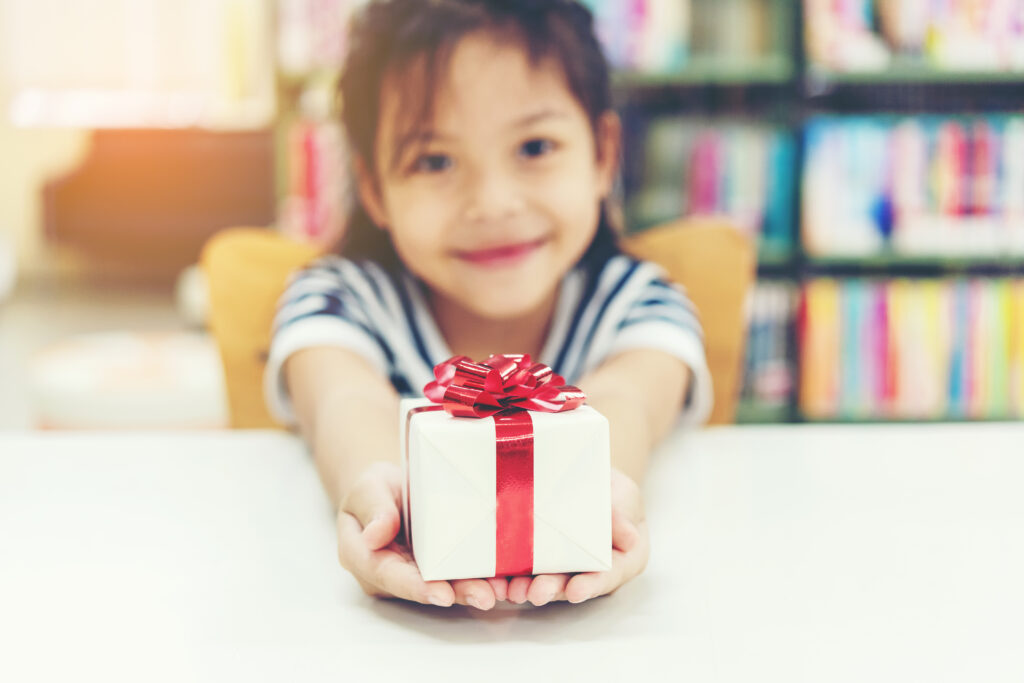
The holiday season is filled with excitement, presents, and lots of sugar! In the middle of so much fun, it’s easy for little ones to get a little self-focused. But this time of year is also the perfect opportunity to help preschoolers start to understand some deeper values like giving, gratitude, and generosity. Preschoolers are naturally curious and eager to feel connected, so it’s pretty easy to help them with giving, gratitude, and generosity. So let’s try to build up these values to become part of everyday life, not just something we talk about in December.
Preschoolers Learn by Doing
One of the best ways to help our kids adopt attitudes of giving, gratitude, and generosity is to give them a chance to practice these things. Preschoolers learn about the world through hands-on experiences. So instead of talking about generosity and care for other people, we can help them put generosity into action.
For example, we can let our kids choose a canned good for a food drive, make some cards for the neighbors, or even choose a toy to donate for another child. While we’re doing it, we can then talk about what’s happening and how it can be so special for the person we’re helping. These concrete actions help to make abstract values feel real and understandable.
Use Simple, Positive Language
These big words like generosity and gratitude don’t mean much to our little ones. But we can define them in a simple way to help our kids understand. Here are some ideas for defining these values of giving, gratitude, and generosity.
Giving means sharing what we have.
Gratitude means feeling happy for something someone did for us.
Generosity means being kind and giving more than we have to.
Let’s see if we can come up with some short, clear explanations to help our children connect the big words with their personal experiences.
Model the Behavior You Want to Teach
Every time we consider a way we’d like to develop positive character qualities in our kids, we have to think about practicing what we preach. Preschoolers learn a lot from watching us, and they are really good at imitating and quoting their parents. Our actions always speak much louder than our explanations.
So let’s thank our kids very clearly when they help in any way. Let’s be sure to thank others well in all of our interactions. And let’s find ways to make kindness part of our own everyday lives. As our kids watch our gratitude, they will see it as normal and expected. And since they will imitate us, let’s do our best to give them positive things to imitate!
Make Giving Personal
While donating to a larger cause is worth doing with our kids, they actually become more invested in giving when they can see the impact of their actions. So let’s find a way to make our giving meaningful.
We could make sure they are part of delivering cookies to a neighbor, and receive the joy that is shared with them. Or if we don’t have a way to connect personally, we could look at photos online to make anonymous giving more personal. Either way, when kids can experience the joy of giving to someone else, they naturally want to repeat it. So let’s find a way to make giving, gratitude, and generosity more personal for them.
Encourage Empathy Through Everyday Conversations
Remember, we don’t have to wait for the holidays to talk about giving, gratitude, and generosity. We can talk about feelings and kindness every day. So let’s think about asking some more feelings-based or values-based questions in our everyday lives. As we do so, here are some feelings signs you could use to help them express these things.
We could ask our kids how they felt when someone shared something with them or when someone helped them. Or we could help them set goals for the day, like how they could do something kind today or how they could help someone out today.
These conversations can help our children grow emotional awareness, which is the foundation for these positive values of giving, gratitude, and generosity.
Keep Expectations Realistic
Our preschoolers can be so empathetic. At the same time, they can still be impulsive and self-focused. This doesn’t mean that they aren’t holding on to these things that we’re teaching them. It’s just where they are in their development. So let’s remember that their self-centeredness is developmentally normal. As they experience this range of feelings and attitudes, let’s work with them where they are.
So if our kids resist donating a toy or forget to say thank you, that’s OK. We can focus on giving them gentle reminders. We can remember to keep modeling these values of giving, gratitude, and generosity for them. And we can give them lots of positive reinforcement when they find ways to be generous and kind.
These small moments add up to help our kids develop positive values, so let’s remember that this is a long game.
At My Signing Time, we make these positive values part of every show we produce and offer to you and your family. Take a look at our Watch Free section or even try us out with a 14-day free trial. Our ad-free, fun, and educational programming can support you in the effort to teach your kids about positive character and living it out in real life.
Our preschoolers are naturally generous and tender-hearted. With some gentle guidance, they can learn to express gratitude, give joyfully, and contribute to their world in age-appropriate ways. As we live a lot of these out in December, let’s remember that these lessons don’t just shape the holiday season. Let’s find ways to continue teaching them this foundation for giving, gratitude, and generosity throughout their lives.